Different work. A shared workspace.
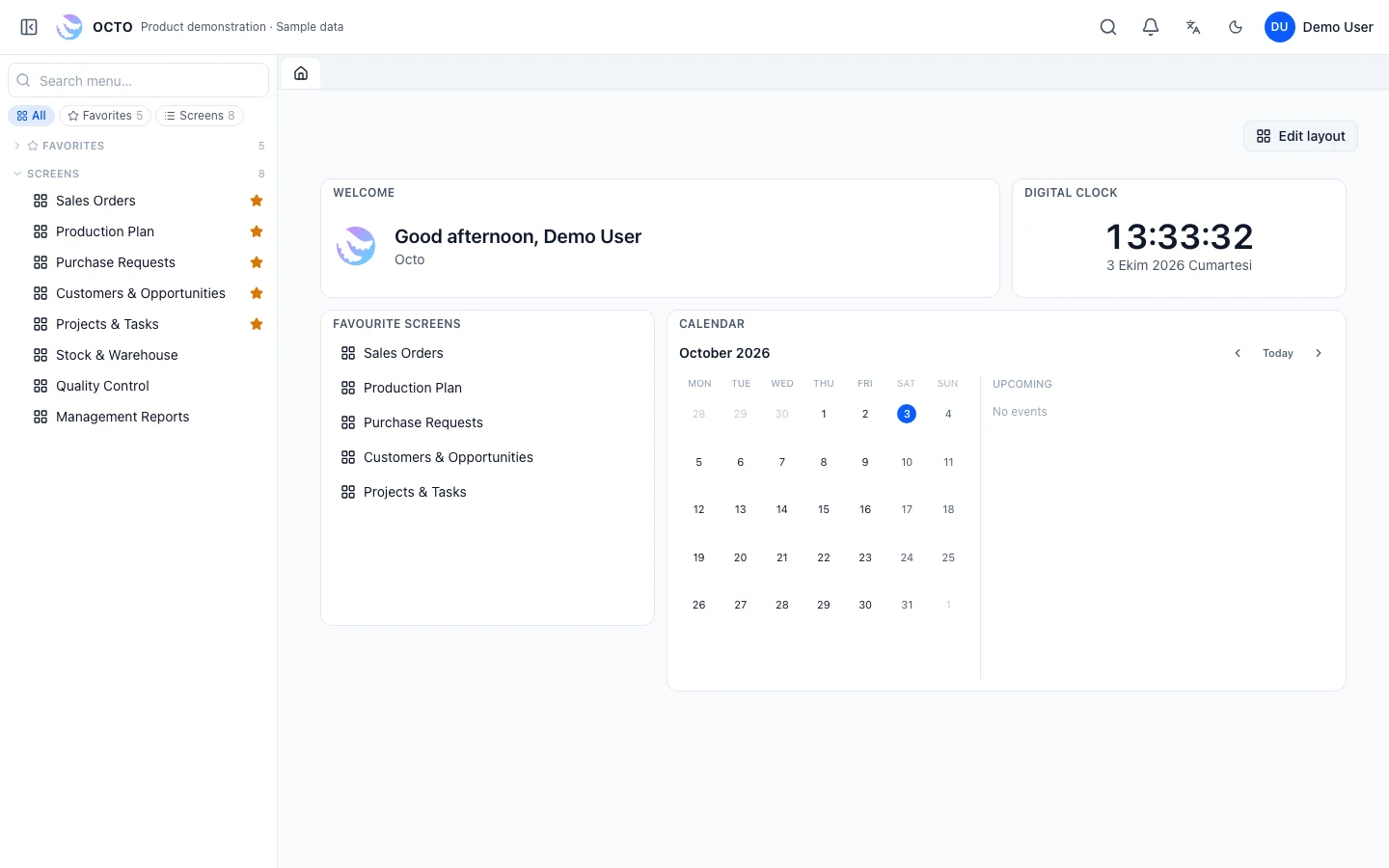
Production, sales, requests and reports open within the same Octo environment. Each team works with the screens it is authorised to access.

OCTO Platform
Octo’s super app approach brings different applications onto one platform. Develop, use and manage your applications here as your needs evolve.
Production, sales, requests and reports open within the same Octo environment. Each team works with the screens it is authorised to access.
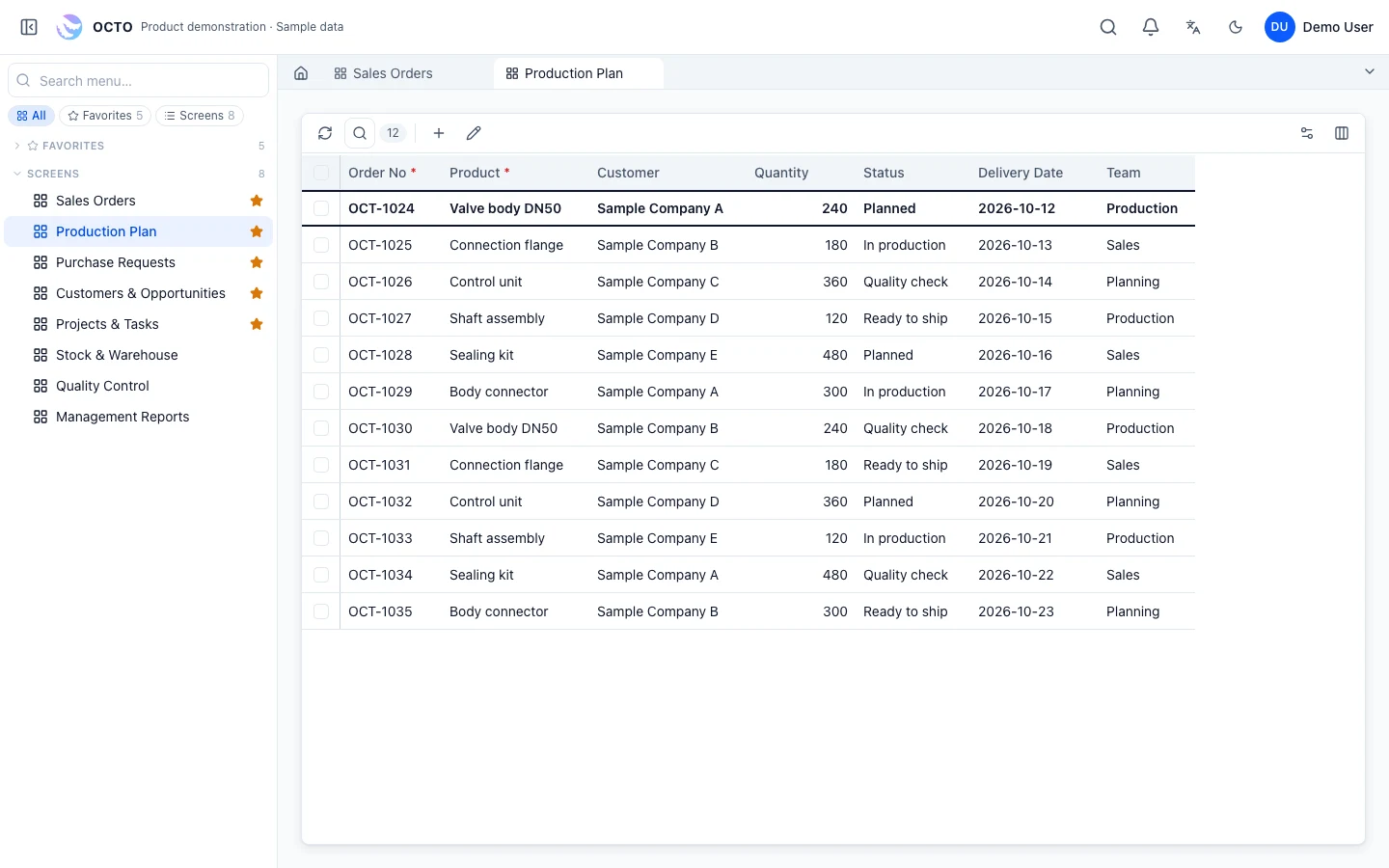
Product stock, prices, warehouses and variants can be managed in related views. The technical team defines data objects and relationships for the application.
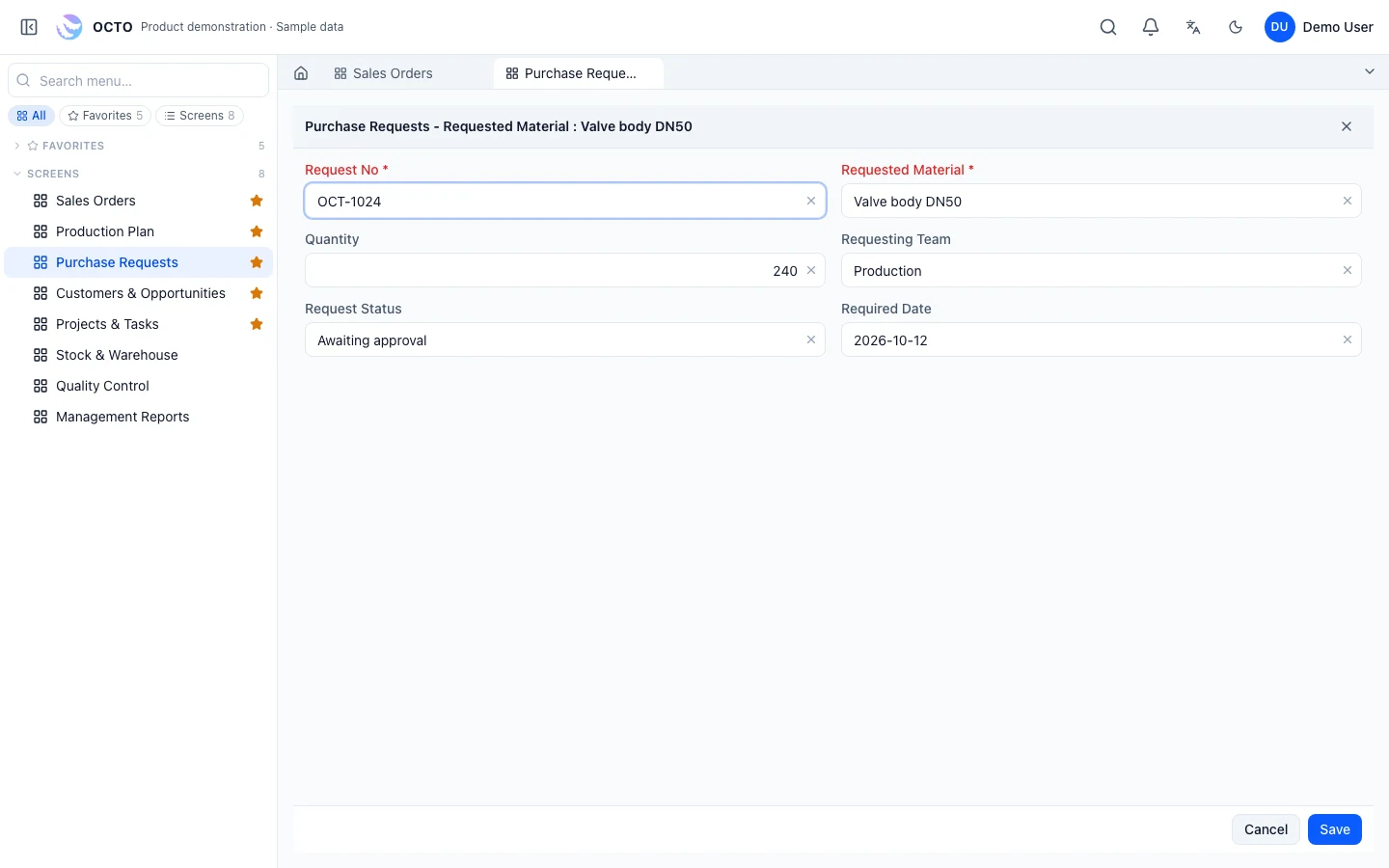
Fields, screens, roles and actions are configured within the application scope. Visual definitions and technical development work together as needed.
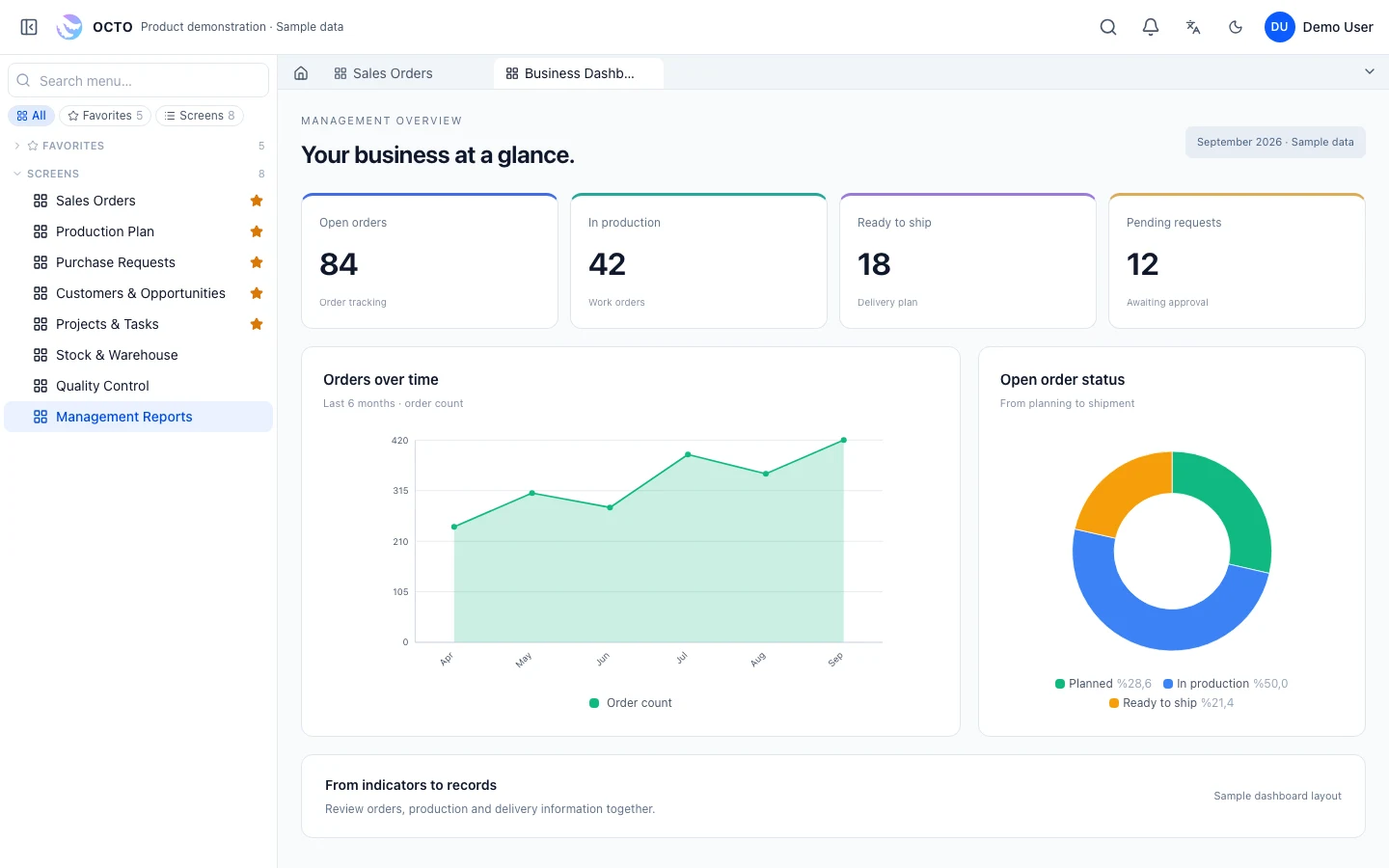
Define sources, fields and parameters, then link the designed report to the relevant application screen.
Octo is more than an output of generated code. It is the platform where business applications are developed, used and managed.
Multi-user access, permissions and business rules are considered within the application scope. We define access requirements at the start.
Screen and workflow design use a no-code approach. SQL queries, data relationships and custom integrations require technical knowledge. Your technical team or Renium consultants handle these tasks.
We review data sources, fields to transfer and connectivity in existing systems. Supported connections and security requirements are confirmed within the project.
Agree the requirements, development, review, testing and deployment steps. Changes affecting a live system are assessed according to their scope.
The data and detail objects in a screen definition establish master–detail relationships. Technical staff configure relationship fields and filters.
Request types, owners, decisions and actions are defined within the application scope. Test rule changes with the relevant records and users.
Platform definitions manage fields, objects and layouts. Report development brings together sources, SQL queries, parameters and layout.
Assess endpoints, formats, authentication and error handling. Distinguish existing connectors from custom development.
Agree servers, data location, access, operations and backup ownership during discovery. Deployment options are proposed against those requirements.
Choose an application scenario and identify records, relationships and roles. Build and test a focused scope; involve technical owners in data and SQL work.
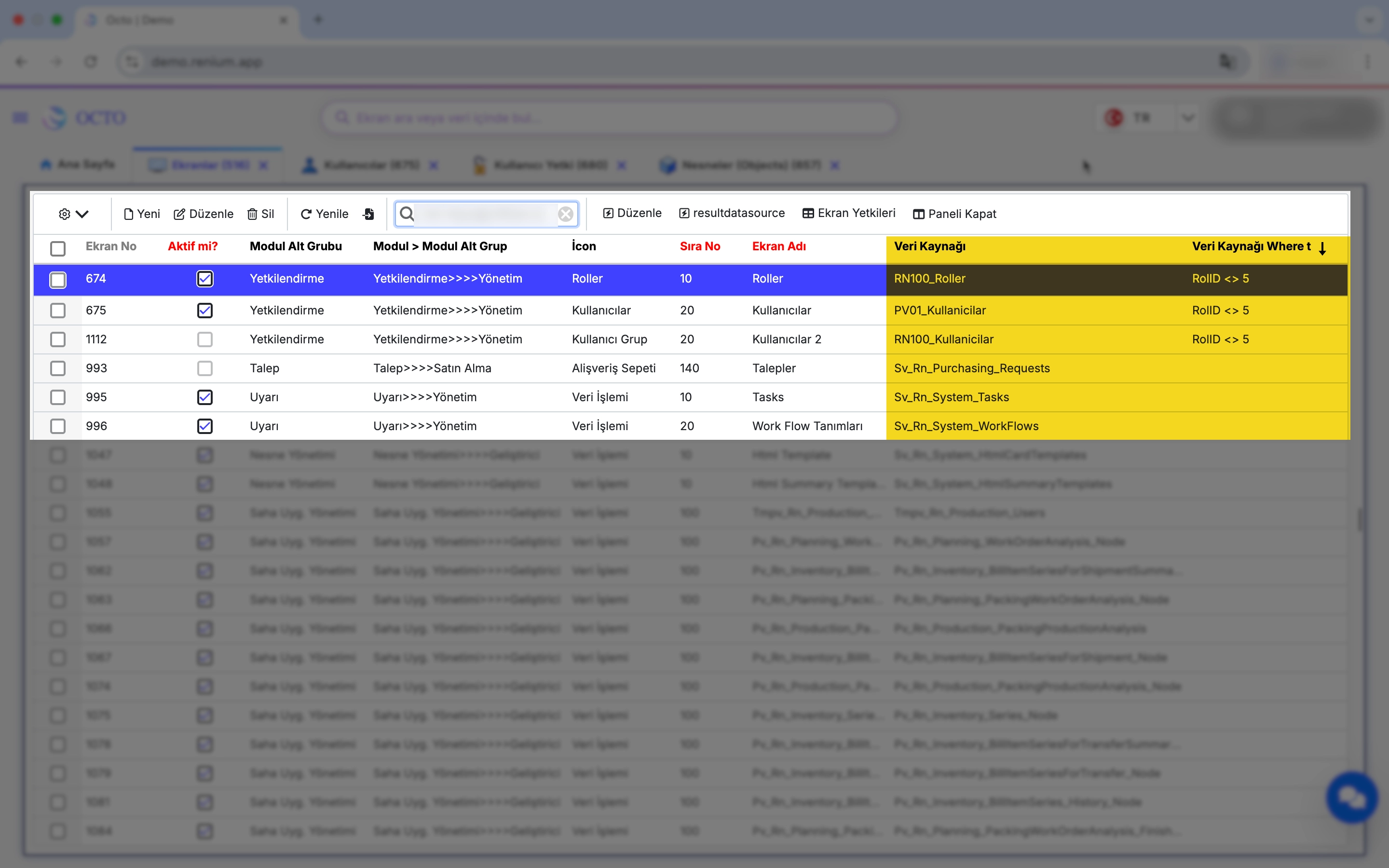 Enlarge screen ↗
ERP, manufacturing, customer management or a process unique to your business. Tell us what you need and let’s find the right starting point.